




Pellet Stove Pipes, Flue Pipes, Elbows and Fittings
Pellet Stove Pipes, Elbows & Flue Fittings | Matteoda

Pellet Stove Pipes, Flue Pipes, Elbows and Fittings

Pellet stove pipes are used to connect the appliance flue outlet to the chimney system, conveying combustion gases through a system compatible with the operating characteristics of the stove.

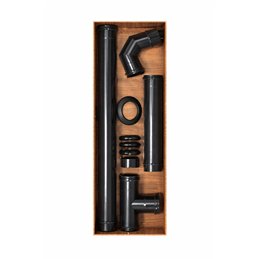
This category includes straight flue pipes, elbows, T-connectors, inspection elements, adapters and accessories for pellet stoves, available in different materials, finishes, thicknesses and diameters.

The correct system depends on the appliance flue outlet diameter, operating temperature and pressure, possible condensate formation, installation layout and the stove manufacturer's instructions.

Which pipe should you choose for a pellet stove?

The available product ranges are designed for different technical and aesthetic requirements. Components from the same system, or components specifically declared as compatible, should be used together.

RangeMain characteristicsTypical application
SMALBO1.2 mm enamelled steel, matt black, with sealing gasketIndoor pellet stove flue connections
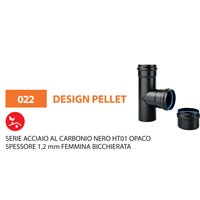
DESIGN PELLET1.2 mm carbon steel with matt black finishConnecting flue pipes for pellet stoves
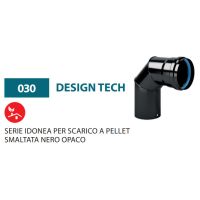
DESIGN TECHBlack enamelled steel modular systemVisible indoor pellet stove connections
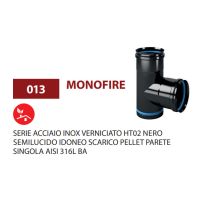
MONOFIRE BlackAISI 316 stainless steel with black finishPellet stove connections requiring a stainless steel system

Always check the individual product and range documentation for exact certifications, operating temperatures, pressure classes and available diameters.

SMALBO pellet stove pipes

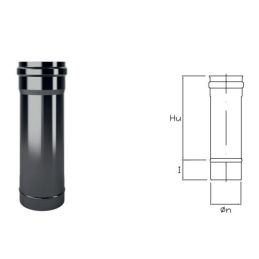
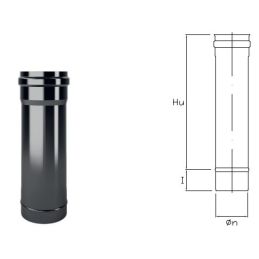
The SMALBO range is made of 1.2 mm enamelled steel with a matt black finish and sealing gasket.

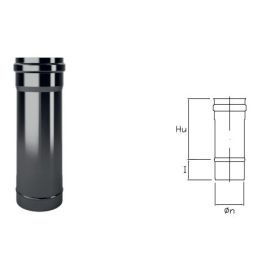
The range includes straight pipes, elbows, T-connectors and accessories for connecting pellet stoves to the flue system.

De Marinis DESIGN PELLET

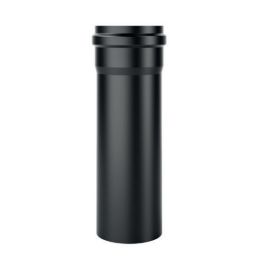
DESIGN PELLET components are manufactured from 1.2 mm carbon steel with a matt black high-temperature finish.

The system includes straight pipes, elbows, T-connectors, inspection components and accessories for pellet stove installations.

In the configuration using the specified sealing gasket, components are declared according to EN 1856-2:2009 with classification T200 – P1 – W – V2. Certain components can be configured for T250 using the dedicated Viton gasket specified by the manufacturer.

De Marinis DESIGN TECH

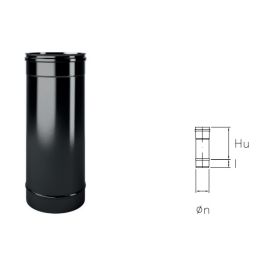
The DESIGN TECH range uses black enamelled steel components designed for modular visible pellet stove connections.

Always refer to the specific technical documentation for temperature, pressure and condensate classifications.

MONOFIRE Black pellet stove pipes

The MONOFIRE Black range is manufactured from AISI 316 stainless steel with a black external finish.

It provides an alternative where a stainless steel flue connection is preferred while maintaining the traditional black appearance of visible pellet stove pipework.

Pellet stove pipe diameter

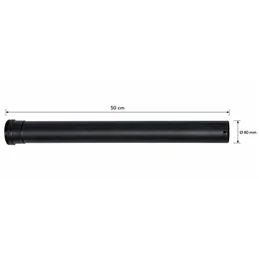
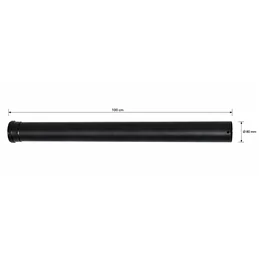
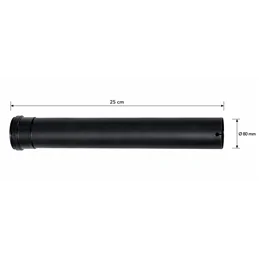
Ø80 mm is one of the most common pellet stove flue outlet sizes, although many appliances and systems also use larger diameters such as Ø100 mm and Ø120 mm.

The correct diameter must be selected according to the appliance manufacturer's requirements and the chimney system design.

Do not arbitrarily reduce the appliance flue outlet diameter.

Pellet stove pipe and chimney system are different components

The visible pipe connecting the pellet stove to the chimney is generally the connecting flue pipe.

The chimney system continues towards the exterior of the building and must use components suitable for the installation and operating conditions.

Outdoor sections, wall and roof penetrations or installations requiring thermal insulation may require an insulated twin-wall chimney system.

Why are sealing gaskets important?

Pellet stove flue systems often require a higher level of gas tightness than traditional natural-draught stove connections.

Many dedicated pellet pipe systems therefore use sealing gaskets between components. Only gaskets specified by the system manufacturer should be used.

Condensate in pellet stove flue systems

The relatively low flue-gas temperatures of modern pellet appliances can lead to condensate formation under certain operating and installation conditions.

The system's declared condensate resistance class should therefore be checked, together with the need for inspection T-connectors and compatible condensate collection or drainage components.

Available components

Depending on the selected range, components may include:

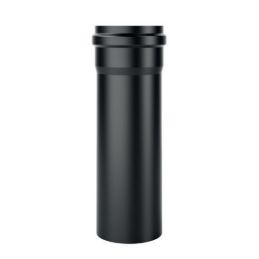
  • straight pipes in different lengths;
  • 45° and 90° elbows;
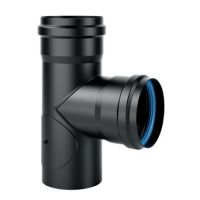
  • 90° T-connectors;
  • inspection elements;
  • T-connector caps;
  • male/male and female/female adapters;
  • wall roses;
  • support collars;
  • other connection accessories.

How to configure a pellet stove flue connection

Before purchasing, check:

  • the appliance flue outlet diameter;
  • whether the outlet is rear or top mounted;
  • the distance between the stove and chimney connection;
  • the number and angle of required elbows;
  • the presence of horizontal sections;
  • whether inspection or condensate collection elements are required;
  • compatibility between all system components;
  • the appliance and flue system manufacturers' instructions.

Browse the subcategories and products below to select the straight pipes, elbows, connectors and accessories required for your pellet stove installation.

Active filters

Follow us on Facebook