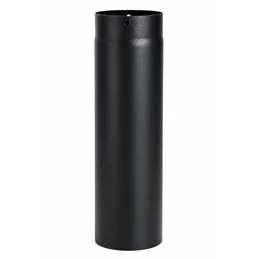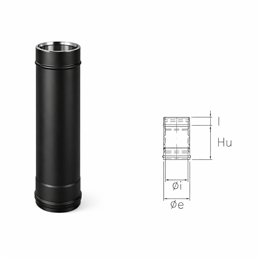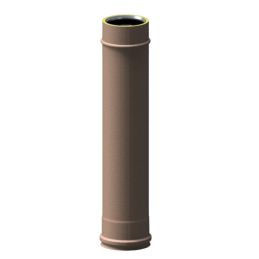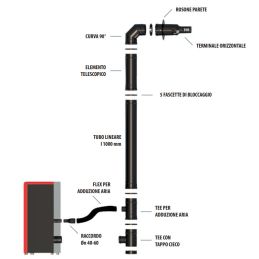






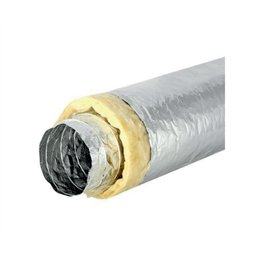
Reference: 700.FLES80
Brand: De Marinis
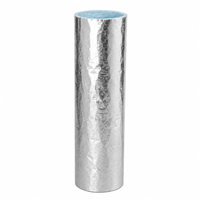
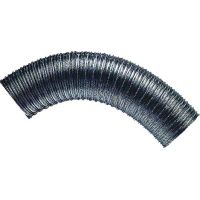
Insulated flexible aluminum pipe
0 Review(s)
Insulated flexible aluminum pipe
€11.60 €14.50

Chimney and flue systems are a fundamental part of any combustion appliance installation and must be selected according to appliance type, fuel, flue-gas temperature, operating pressure and installation conditions.
Matteoda.it offers systems for pellet stoves, wood-burning stoves and fireplaces, boilers, condensing appliances and ventilation applications, including single-wall, insulated twin-wall, flexible, oval, concentric and polypropylene systems.
The range includes De Marinis chimney systems together with elbows, tees, terminals, supports, inspection components and certified roof-penetration solutions.
| System | Typical application |
| Single-wall stainless steel | Relining protected shafts and compatible chimney cavities |
| Insulated twin-wall | External chimney systems and installations requiring thermal insulation |
| Flexible stainless steel | Relining existing shafts with bends or offsets |
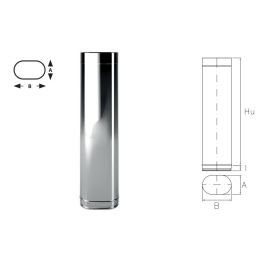
| Oval stainless steel | Narrow or rectangular existing chimney shafts |
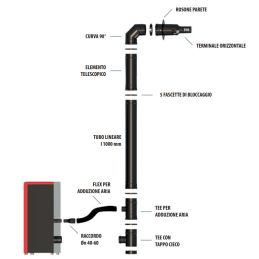
| Concentric | Combined flue-gas exhaust and combustion-air intake |
| Polypropylene | Compatible condensing appliances |
Single-wall stainless-steel systems are commonly used for relining protected shafts, technical ducts and compatible existing chimneys.
MONOInox uses AISI 316L stainless steel and includes modular lengths, elbows, tees, terminals and inspection components.
An insulated twin-wall chimney combines an inner flue, thermal insulation and an outer protective wall.
This configuration is commonly used outdoors and in installations where flue-gas temperature needs to be maintained along the chimney route.
ISOAIR uses a twin-wall construction with a static air gap between the inner and outer pipes.
ISO10 uses approximately 10 mm of insulation between the inner and outer stainless-steel walls.
ISO25 uses 25 mm mineral insulation and an AISI 316L inner wall.
It is widely used for biomass and other compatible heating appliances.
ISO25 PLUS G50 uses 25 mm high-density mineral insulation and is designed to achieve a certified 50 mm clearance to combustible materials in its G50 configuration.
This clearance applies only to the certified system configuration.
ISO50 uses approximately 50 mm of insulation for applications requiring greater thermal insulation.
FLEXInox is an AISI 316L double-wall flexible liner with a smooth inner surface and corrugated outer surface.
It is particularly useful for relining existing chimneys and technical shafts with bends or difficult offsets.
OVALInox uses an AISI 316L oval section designed to make better use of narrow or rectangular chimney shafts.
It can be useful where a correctly sized circular rigid liner cannot fit within the available space.
COAXIAL combines flue-gas exhaust and combustion-air intake within one concentric system.
It uses AISI 316L stainless steel internally and AISI 304 externally.
A concentric flue should not be confused with an insulated twin-wall chimney: the outer annular space is used for combustion air rather than thermal insulation.
EUROPLAST is a polypropylene flue system intended mainly for compatible condensing appliances and low-temperature applications.
It is not a substitute for high-temperature stainless-steel biomass chimney systems.
Penetrations through timber roofs, floors and combustible structures require particular attention to certified clearances.
Dedicated products include FIRE PASS, PASSANTE, PASSANTE SLIM, SICURO and SICURO SLIM G0.
Generic insulation materials should not be treated as a substitute for certified penetration components.
Mineral-wool and ceramic-fibre insulation products are available for specific compatible applications.
Adding external insulation does not automatically change the certified chimney designation or clearance to combustible materials.
Pellet appliances require a chimney system selected according to flue-gas temperature, operating pressure, diameter, condensation conditions and chimney height.
Wood-burning appliances require particular attention to high flue-gas temperatures, draught and certified clearance from combustible materials.
The connecting flue pipe joins the appliance to the chimney, while the chimney carries the combustion products to the terminal above the building.
The two sections may use different certified systems.
Chimney diameter should not be selected according to appliance outlet diameter alone.
Output, flue temperature, chimney height, route, bends, operating pressure and terminal configuration must all be considered.
External chimney routes generally use insulated twin-wall systems to limit flue-gas cooling.
Protected internal shafts may allow compatible single-wall systems depending on the installation.
Some chimney systems are certified for wet operation, while others are designed only for dry flue gases.
Always check the certified designation of the selected system.
Different appliances may require natural-draught or positive-pressure chimney systems.
The correct pressure class must be matched to both the appliance and the certified chimney configuration.
The CE designation of a chimney system provides information about:
The minimum clearance from timber and other combustible materials is determined by the certified chimney designation.
Adding insulation around a chimney does not automatically permit a reduction in the certified clearance.
Chimney systems must be installed according to the manufacturer's instructions, certified designation, appliance requirements and applicable regulations.
Inspection and cleaning access must also be provided.
Check:
Matteoda.it offers single-wall, insulated twin-wall, flexible, oval, concentric and polypropylene chimney systems, together with terminals, fittings, supports and certified roof-penetration components.
Many sizes and configurations are supplied to order. Please contact Matteoda customer service to check diameter, compatibility, delivery times and the components required for your installation.
Subcategories
There are 887 products.
Reference: 700.FLES80
Brand: De Marinis
Reference: 704.97627-46
Brand: SMALBO
Reference: N1T280
Brand: De Marinis
Reference: K1T180
Brand: De Marinis
Reference: KITNCX080130
Brand: De Marinis
Reference: KITNCX080130
Brand: De Marinis
Reference: R5T380
Brand: De Marinis
Reference: R5T280
Brand: De Marinis
Reference: OT2130
Brand: De Marinis
Reference: 704.97857-06
Brand: Blinky
Reference: R2T280
Brand: De Marinis
Reference: P2T180
Brand: De Marinis